In this article
“I already paid” is a precise customer complaint with several possible causes. The payment may belong to a different app account. The store may recognize a purchase that the product has not associated with the current account. Or the customer may be signed in correctly while the device still shows stale access.
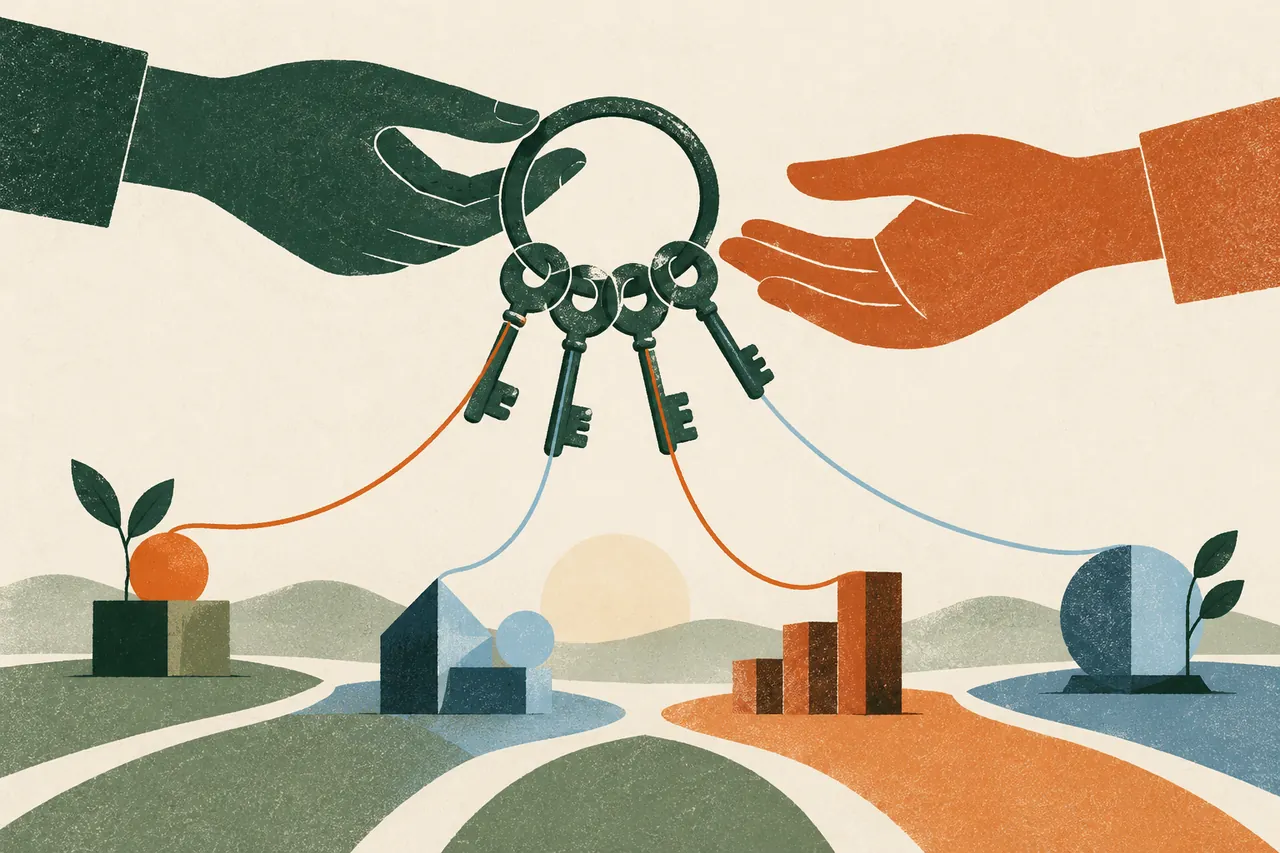
A useful recovery flow distinguishes those cases before offering another subscription. Keep four things separate: the person’s product account, their store account, the purchase record and the entitlement that permits a feature. They are related, but they are not interchangeable identifiers.
Give each record one job
The product account identifies where the customer signs in and stores their work. The store account participates in purchases through that store. The purchase record identifies the transaction or subscription history. The entitlement answers whether a particular product capability is available now.
An email address displayed in two systems does not, by itself, prove those records refer to the same authenticated person or purchase. Build the association through the supported authentication and purchase-verification paths. Preserve the originating purchase channel so the product knows where subscription management belongs.
The scenarios below are hypothetical design cases. They describe decisions a product team should make and test; they are not claims that a restore or account transfer was performed.
A reinstall is a recovery path
A subscriber deletes the app and reinstalls it on the same device. Locally stored state may be gone, while their product account and purchase history still exist elsewhere. The first decision is whether the customer is returning to an identified account or to an anonymous purchase.
For an identified account, offer sign-in and check the current entitlement associated with that account. Keep purchase restoration available where appropriate, but do not present buying again as the default remedy for a missing local record.
For an anonymous purchaser, the store recovery path becomes more important. RevenueCat’s restoration documentation advises calling restorePurchases from a user action because it can trigger operating-system sign-in prompts. If a purchase is already attached to another customer, the result depends on the configured transfer behavior.
After the operation, check the resulting entitlement. “Restore request completed” and “Paid access is active” are different outcomes. A useful response either opens the purchased capability or explains the next specific step, such as signing into the account that holds the subscription.
A new device can also be a new platform
A customer buys on a phone and later signs into a tablet or web app. Begin with the product promise: does the purchased subscription include access on the destination? Cross-device access within one offer should be explicit; cross-platform availability is not something to infer from the existence of a receipt.
If the offer includes that access, the destination should ask the product’s account and entitlement system whether the signed-in customer is eligible. A web app cannot assume that a mobile store restore operation will run in its environment. It needs a supported way to recognize the account-level access already established by the original purchase.
Show the subscription’s management channel when that helps the customer change or cancel it. Do not send every subscriber to the same billing page if purchases can originate in several places.
Also distinguish two problems that can occur together: access on the new device and an unwanted second purchase. Restoring access does not necessarily cancel or refund another subscription. Support should be able to identify the separate purchase records without treating a single “premium” flag as the whole history.
An anonymous purchase followed by sign-in
Optional registration creates a difficult transition. A customer buys before making an account, then signs into an account they already had. The application must decide how to associate the purchase and the customer’s existing work.
RevenueCat’s identity documentation describes conditional aliasing when an anonymous customer logs into a custom App User ID. The result depends on whether that ID exists and already has an anonymous alias. A login is therefore not a universal instruction to merge every identity or transfer every purchase.
Before implementing the flow, specify which account should own the subscription and which data should remain separate. Combining subscription access does not automatically justify merging saved documents, team memberships or another person’s workspace.
Test a new account, an existing account without prior purchase history, and an existing account that already has a subscription. Include a customer who changes their mind and signs out before the association finishes. The product should leave an inspectable record of which account received access, rather than relying on the last screen shown in the app.
Give the customer a clear confirmation of the account they are attaching the purchase to. Avoid exposing sensitive account details merely because someone presents a purchase-related identifier.
Two app accounts claiming the same purchase
A customer forgets which sign-in method they originally used and creates another account. Both may be theirs, but the product cannot safely assume that from a support message alone.
RevenueCat’s restore settings include transferring purchases to a new App User ID and retaining them with the original ID. The selected behavior affects apps throughout the project and can also affect new purchases associated with an existing receipt. The choice deserves product and support review, not just an SDK default accepted during implementation. RevenueCat limits the keep-with-original setting to apps that require every customer to create an account before purchasing.
If the business requires purchase ownership to stay with the original account, build an account-recovery path that makes that policy usable. If supported transfers are allowed, specify what happens to access on the previous account and verify the result on both sides. A successful transfer should not accidentally leave two independent accounts entitled to a single nonshareable purchase.
Do not solve an ambiguous case by granting permanent access to every account involved. That may hide the immediate complaint while leaving renewal, cancellation and later recovery attached to the wrong record.
Give support a timeline that explains the problem
Support needs a view of the product account, purchase channel, current entitlement and significant association changes. Use references that the customer can provide safely, then authenticate the recovery according to the account’s normal process. A receipt screenshot alone should not become a universal account-transfer credential.
The timeline should distinguish purchase detected, account associated, entitlement granted, entitlement expired and access synchronized to the device. Those events make it possible to tell whether the problem is an identity mismatch, a purchase-state issue or delayed provisioning.
When the product is still checking, say so. A temporary inability to confirm access should not immediately become “You have never subscribed.” Likewise, previously cached access should not be described as current if it has not been refreshed according to the product’s policy.
Test the complete return journey
Use the four scenarios as a release checklist: reinstall, new device or platform, anonymous purchase followed by sign-in, and two accounts presenting the same purchase. For each, verify the account that ends up entitled, the account that loses access if a transfer occurs, and the location where the customer manages renewal.
Then repeat the recovery action. The second attempt should not create another subscription or undo a valid association. Include a delayed purchase update and a signed-out device so the flow is tested beyond the easiest path.
The customer should finish knowing which account has access and what to do next. A recovery flow earns trust when it restores the right entitlement without making the customer buy the same benefit again.
Sources
Something we should clarify?
Suggest a correction